
Wormholes and the Milky Way: unlocking the Secrets of Intergalactic Travel – are the two of the most captivating subjects for both scientists and space enthusiasts. With the advent of new technologies, astrophysics is expanding its horizons and tackling questions like: What are wormholes? What is the Milky Way? How many galaxies exist? Can humans ever travel from one galaxy to another? In this detailed blog, we dive deep into these mysteries and explore what modern science has uncovered.
Table of Contents
- What Are Wormholes?
- Understanding the Milky Way
- How Many Galaxies Are There in the Universe?
- Can Humans Travel Between Galaxies?
- Scientific Discoveries and Theories
- Challenges of Intergalactic Travel
- Conclusion
1. What Are Wormholes?
Wormholes, also known as Einstein-Rosen bridges, are hypothetical passages through space-time that could create shortcuts for long journeys across the universe. First predicted by Albert Einstein and Nathan Rosen in 1935, wormholes are solutions to the Einstein field equations of general relativity.
Key Characteristics:
| Feature | Description |
|---|---|
| Nature | Hypothetical tunnel through space-time |
| Theoretical Basis | Einstein’s Theory of General Relativity |
| Function | Connects distant points in space or different universes |
| Stability Issue | Naturally unstable, would collapse without exotic matter |
Diagram:
[Point A]------(Wormhole Tunnel)------[Point B]Wormholes remain theoretical, as no observational evidence has confirmed their existence yet. However, they are frequently discussed in the context of interstellar and intergalactic travel.
2. Understanding the Milky Way
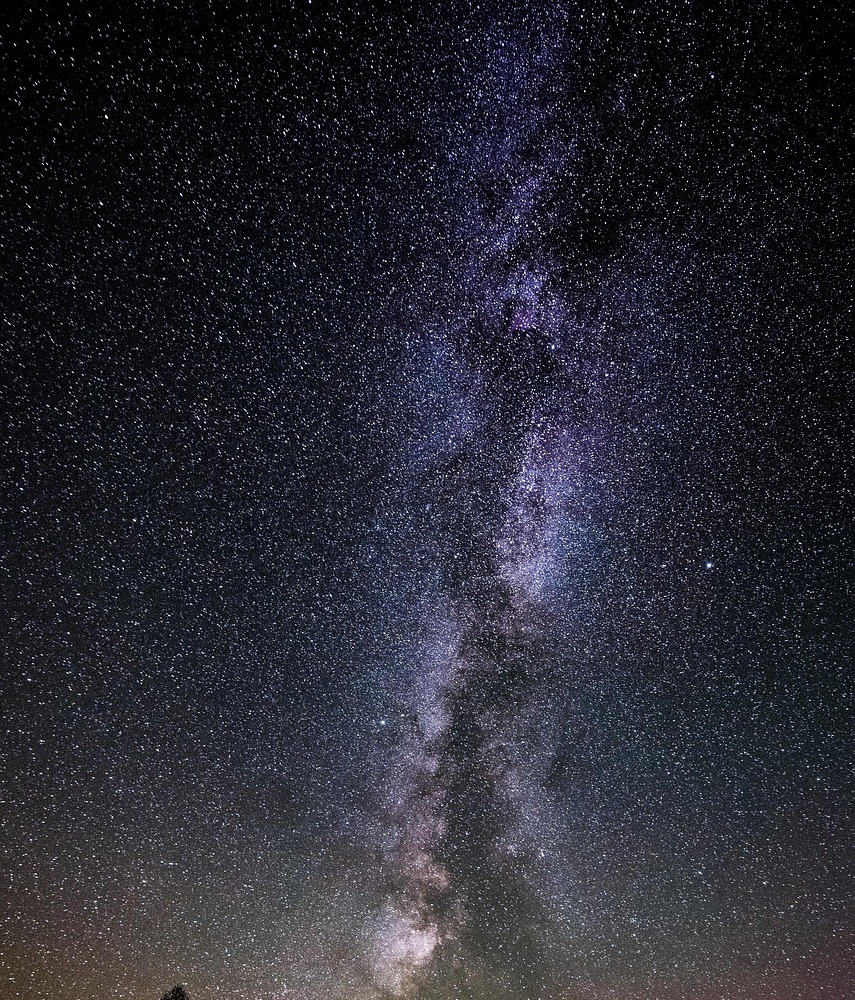
The Milky Way is the galaxy that contains our solar system. It appears as a hazy band of light in the night sky formed by stars that cannot be individually distinguished by the naked eye.
Key Facts about the Milky Way:
| Attribute | Value |
| Type | Barred Spiral Galaxy |
| Diameter | ~100,000 light-years |
| Number of Stars | Over 200 billion |
| Age | Around 13.6 billion years |
| Location of Earth | Orion Arm (about 27,000 light-years from galactic center) |
Diagram:
        * Milky Way Spiral Galaxy *
        [Galactic Core] -- [Orion Arm] -- [Earth's Location]
3. How Many Galaxies Are There in the Universe?
Thanks to the Hubble Space Telescope and newer technologies like the James Webb Space Telescope, astronomers estimate that the observable universe contains about 2 trillion galaxies.
Types of Galaxies:
| Type | Description | Example |
| Spiral | Flat, rotating disk with central bulge | Milky Way |
| Elliptical | Round or oval, older stars | M87 |
| Irregular | No defined shape | Large Magellanic Cloud |
Table: Galaxy Count by Survey
| Telescope/Mission | Estimated Galaxy Count |
| Hubble Space Telescope | 100 – 200 billion |
| James Webb Telescope | Up to 2 trillion |
4. Can Humans Travel Between Galaxies?
Currently, intergalactic travel remains far beyond our technological reach. The closest major galaxy to the Milky Way is Andromeda, which is approximately 2.537 million light-years away.
Challenges to Intergalactic Travel:
| Challenge | Explanation |
| Vast Distances | Even light takes millions of years to travel between galaxies |
| Energy Requirements | Tremendous amounts of energy needed |
| Human Lifespan | Too short to survive such long journeys |
| Technological Limits | Current propulsion systems inadequate |
5. Scientific Discoveries and Theories
While intergalactic travel sounds like science fiction, science is gradually catching up with the ideas.
Key Theories and Discoveries:
| Theory/Concept | Scientist(s) | Description |
| Wormhole Theory | Einstein & Rosen (1935) | Hypothetical bridge in space-time |
| Alcubierre Drive | Miguel Alcubierre (1994) | Theoretical warp drive that contracts and expands space |
| Quantum Tunneling | Various | Particles pass through barriers at quantum level |
| Multiverse Theory | Many | Possibility of infinite parallel universes |
The Alcubierre Drive, in particular, proposes that a spacecraft could achieve faster-than-light travel by warping space-time—a concept still theoretical but being actively explored in labs.
6. Challenges of Intergalactic Travel
Beyond theoretical models, real-world application faces enormous barriers.
Obstacles:
- Fuel and Resources: Impossible with current chemical-based rockets.
- Time Dilation: Traveling at speeds near light affects time perception.
- Radiation Exposure: High-energy cosmic rays can be fatal.
- Exotic Matter: Needed to stabilize wormholes but not yet discovered.
Current Human Limits:
| Limitation | Current Capability |
| Farthest Human Object | Voyager 1 (~15 billion miles from Earth) |
| Fastest Spacecraft | Parker Solar Probe (430,000 mph) |
| Manned Missions Beyond Moon | None since Apollo missions |
7. Conclusion
While the dream of traveling from one galaxy to another remains in the realm of science fiction for now, science is laying the groundwork for such possibilities. Wormholes, warp drives, and the study of galaxies are not just theoretical discussions—they are part of an ongoing scientific effort to understand the universe and humanity’s place within it.
As telescopes get better and theories evolve, we move one step closer to turning these cosmic dreams into reality. For now, we watch the stars and wonder—what if?



1 thought on “Wormholes and the Milky Way: Unlocking the Secrets of Intergalactic Travel”